

Challenging Gender Stereotype
Gender stereotypes are widely held beliefs or assumptions about the characteristics, roles, and behaviours that are typically associated with men and women in a given society. These stereotypes are often based on societal norms and expectations regarding gender roles and are deeply ingrained in cultural beliefs and attitudes.
Gender Stereotypes Can Manifest in Various Ways, Such As:
- Personality traits: Assigning certain personality traits or characteristics to men or women based on societal expectations. For example, the stereotype that men are assertive, independent, and strong, while women are nurturing, emotional, and passive.
- Domestic roles: Presuming that women are primarily responsible for caregiving, household chores, and child-rearing, while men are expected to be the breadwinners and have less involvement in domestic tasks.
- Occupational roles: Assuming that certain professions or industries are more suitable for one gender over the other. For instance, the belief that women are more suited for nurturing and service-oriented jobs, while men are more suited for leadership positions or physically demanding jobs.
- Appearance and presentation: Dictating standards of beauty, grooming, and fashion that are specific to each gender. For instance, the expectation that women should be thin, graceful, and wear makeup, while men should be muscular, tall, and have a rugged appearance.
- Emotional expression: The stereotype that men should be stoic, strong, and not show vulnerability or express emotions openly, while women are often expected to be more emotionally expressive, empathetic, and nurturing. Encouraging men to suppress emotions and exhibit toughness, stoicism, and self-reliance, while women are expected to be more emotionally expressive and empathetic.
- Breadwinner and caregiver roles: The expectation that men should be the primary breadwinners, responsible for providing financial support for the family, while women are expected to primarily focus on caregiving and household responsibilities.
- Leadership and assertiveness: The belief that men are naturally more assertive, confident, and suited for leadership positions, while women are perceived as more passive, nurturing, and better suited for supportive roles.
How Can the Gender Role Stereotypes Be Broken?
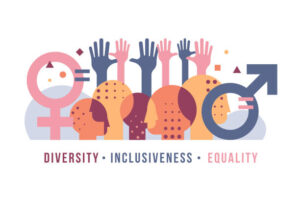
It’s important to recognize that breaking gender role stereotypes is an ongoing process that requires long-term commitment and sustained efforts from multiple stakeholders. By working together, individuals, communities, organizations, and institutions can contribute to creating a more inclusive and equal society.
- Breaking gender role stereotypes requires collective efforts from various individuals, institutions, and society as a whole. Here are some strategies that can contribute to challenging and breaking down gender role stereotypes:
- Education and awareness: Promoting education and awareness about gender equality and the harmful impact of gender role stereotypes is crucial. This includes incorporating gender equality topics in school curricula, conducting workshops and training sessions, and promoting open discussions about gender norms and stereotypes.
- Media representation: Encouraging diverse and inclusive representations of gender in the media is important. Media outlets can strive to showcase a range of gender identities, expressions, and roles, breaking away from traditional stereotypes and promoting more realistic and inclusive portrayals.
- Promoting positive role models: Highlighting individuals who challenge gender norms and serve as positive role models can be influential. By celebrating and amplifying the achievements and stories of individuals who defy traditional gender roles, society can inspire others to question and transcend gender stereotypes.
- Encouraging critical thinking: Promoting critical thinking skills allows individuals to question and challenge gender role stereotypes. By encouraging individuals to analyze and question societal expectations, they can develop a deeper understanding of the harmful impact of stereotypes and actively resist them.
- Encouraging diverse career choices: Promoting and supporting diverse career choices is important in challenging gender role stereotypes. Encouraging individuals to pursue their passions and talents regardless of traditional gender norms can help break down barriers and open up opportunities for all.
- Engaging men and boys: Engaging men and boys in discussions and initiatives focused on gender equality is crucial. Challenging gender stereotypes requires involving everyone in the conversation and encouraging men to embrace non-traditional roles and behaviors.
- Policy changes and workplace initiatives: Implementing policies and initiatives that promote gender equality and challenge stereotypes can have a significant impact. This includes equal pay measures, flexible work arrangements, promoting diversity in leadership positions, and combating workplace discrimination.
- Empowering women and girls: Providing opportunities and empowering women and girls is essential in challenging gender role stereotypes. By supporting their education, leadership development, and access to resources, society can break down barriers and create more equitable opportunities.
- Community engagement: Engaging with local communities and grassroots organizations that promote gender equality can create a positive change. Collaborating with community leaders and organizations can help challenge stereotypes at a grassroots level and foster social acceptance and inclusion.
Can the Media Break Gender Role Stereotypes?
The media has the potential to break gender role stereotypes and contribute to the dismantling of traditional gender expectations. However, it’s important to note that the media is just one piece of the puzzle in achieving gender equality, and its influence should be seen within the broader context of societal change. Here’s a more nuanced perspective:

- Challenging narratives: The media can challenge and question traditional gender role stereotypes by presenting alternative narratives and diverse representations. By showcasing a range of identities, experiences, and perspectives, the media can challenge the notion that there is a single, fixed way to be a man or a woman.
- Normalizing diversity: By featuring individuals who defy gender norms and promoting a more inclusive range of gender expressions, the media can help normalize diversity. When people see a wider variety of gender identities and presentations in the media, it can challenge preconceived notions and reduce the stigma associated with deviating from traditional roles.
- Providing visibility and representation: The media can provide visibility to individuals who break gender role stereotypes, offering them a platform to share their stories and experiences. This can be empowering for marginalized groups and can inspire others to challenge societal expectations.
- Shaping cultural narratives: Media has a significant impact on shaping cultural narratives and influencing societal attitudes. By actively portraying diverse gender roles and challenging stereotypes in films, TV shows, news coverage, and other media content, the media can contribute to changing societal perceptions and expectations.
- Influencing public discourse: The media has the power to shape public discourse and influence public opinion. Through news reporting, opinion pieces, and discussions, the media can facilitate conversations around gender role stereotypes and their impact on society. This can raise awareness, challenge existing beliefs, and drive social change.
- Reflecting societal progress: The media can also reflect and amplify the progress that society is making in challenging gender role stereotypes. When media outlets prioritize diverse representation and challenge traditional norms, it signals to society that change is happening and encourages further progress.
It’s important to note that while the media has the power to break gender role stereotypes, it is also influenced by societal attitudes and commercial interests. Media consumers can play an active role by demanding more diverse and inclusive representations, supporting media outlets that prioritize breaking stereotypes, and engaging in critical media consumption. By working collectively, the media and society can make significant progress in challenging and dismantling gender role stereotypes.